
Can you tell the difference between raw, 100% natural shea butter and refined shea butter? If so, kudos! You're already on your way to identifying a high-quality product. If not, keep reading to finally learn how to distinguish between high-quality shea butter and a lesser alternative.
Features
Shea butter raw: it is yellow. Its smell is strong and can be unpleasant. Some, however, say it has a hazelnut scent.
Raw shea butter is an unrefined butter that has retained all its active ingredients, especially its vitamins.
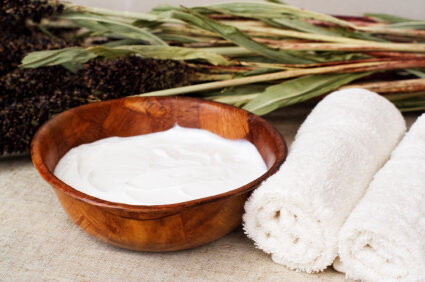
Refined shea butter: it is white and (almost) odorless.
Refining is a process that, unfortunately, affects the quality of the product. Indeed, shea butter loses some of its active ingredients (and especially its vitamins) during refining.
Refining… in brief
It takes place in 3 steps:
- Neutralization: to eliminate fatty acids susceptible to oxidation
- Deodorization: to remove the smell of shea
- Decolorization: to obtain a white butter
Extraction methods
You probably don't know it, but the method of extracting shea butter also affects the quality of the product.
Cold-press extraction: a mechanical method that preserves the active ingredients of shea butter. This results in a raw, pure, and high-quality shea butter. Therefore, prioritize products bearing the mention "first cold press" and the organic label, which are true guarantees of quality.
Solvent extraction: the butter is extracted using a solvent called hexane. This is by far the most profitable method because it allows for a larger quantity of butter to be obtained. However, it has the disadvantage of providing lower quality shea butter.